
Charlotte’s MDS Story
I first heard about the MdS watching Transworld Sports about 25 years ago and remember thinking what a fantastic and crazy event. Spring forward another 12 or so years and I had a chance encounter in the Lake District with an old family friend whose husband had just returned from running the MdS and he was hobbling around town with his feet all bandaged up and barely able to move! We spent time chatting about what he’d been doing and what the event was all about, it sounded brutal but a seed was sown and the MdS cemented a place on my running bucket list!
Fast Forward to 2021, a year had gone since my dad had passed away and only a few months since my Gran had also left us. I was chatting to a friend at a race and she was telling me she wanted to enter the Marathon des Sables and my interest in the race was ignited again. This was a race that Scott was never going to do with me, so knowing that there would be someone else out there I knew made it perfect timing, so in April 2021 I paid my deposit and entered the 36th edition of the Marathon des Sables!! From then on, myself, my friends and my family then had 12 months of all consuming mental, emotional and physical focus on getting to the finish line of the MdS.
My general strength training program consists of 2 full body work outs per week plus daily flexibility and mobility sessions. However during the last 6 months of my MDS training we focused on just a few key exercises which I lifted heavy (2-5 reps) with low volume (2-4 sets). The objective was to get my legs as strong as possible to improve my running economy and more resistant to injury whilst creating minimal fatigue and soreness that could impact upon my running schedule
I think the best way to summarise those 12 months would be dedication, commitment and hard bloody work! I felt confident I would have the mental determination to get me through the race but I was worried about my physical condition. As soon as I entered I was on to Rich letting him know what I’d done and a plan was put together to get my strong and ready. My general strength training program consists of 2 full body work outs per week plus daily flexibility and mobility sessions. However, during the last 6 months of my MDS training we focused on just a few key exercises which I lifted heavy (2-5 reps) with low volume (2-4 sets). The objective was to get my legs as strong as possible to improve my running economy and be more resistant to injury, whilst creating minimal fatigue and soreness that could impact upon my running schedule.
From Christmas to March, I was increasing my mileage building up to 50 mile weeks, I was working hard in the gym on my strength and conditioning, I installed a cheap static bike set up in the garden shed with heaters, I was running with increasing weights in my back pack and even using the neighbours indoor equine centre to run in circles for hours on end in my “Cheshire Desert”!! In the final 2 weeks before departure I was travelling to Manchester every other day to spend 90 minutes sweating like you can’t imaging in a heat chamber, I cut out all alcohol and I even cut back on cake!!
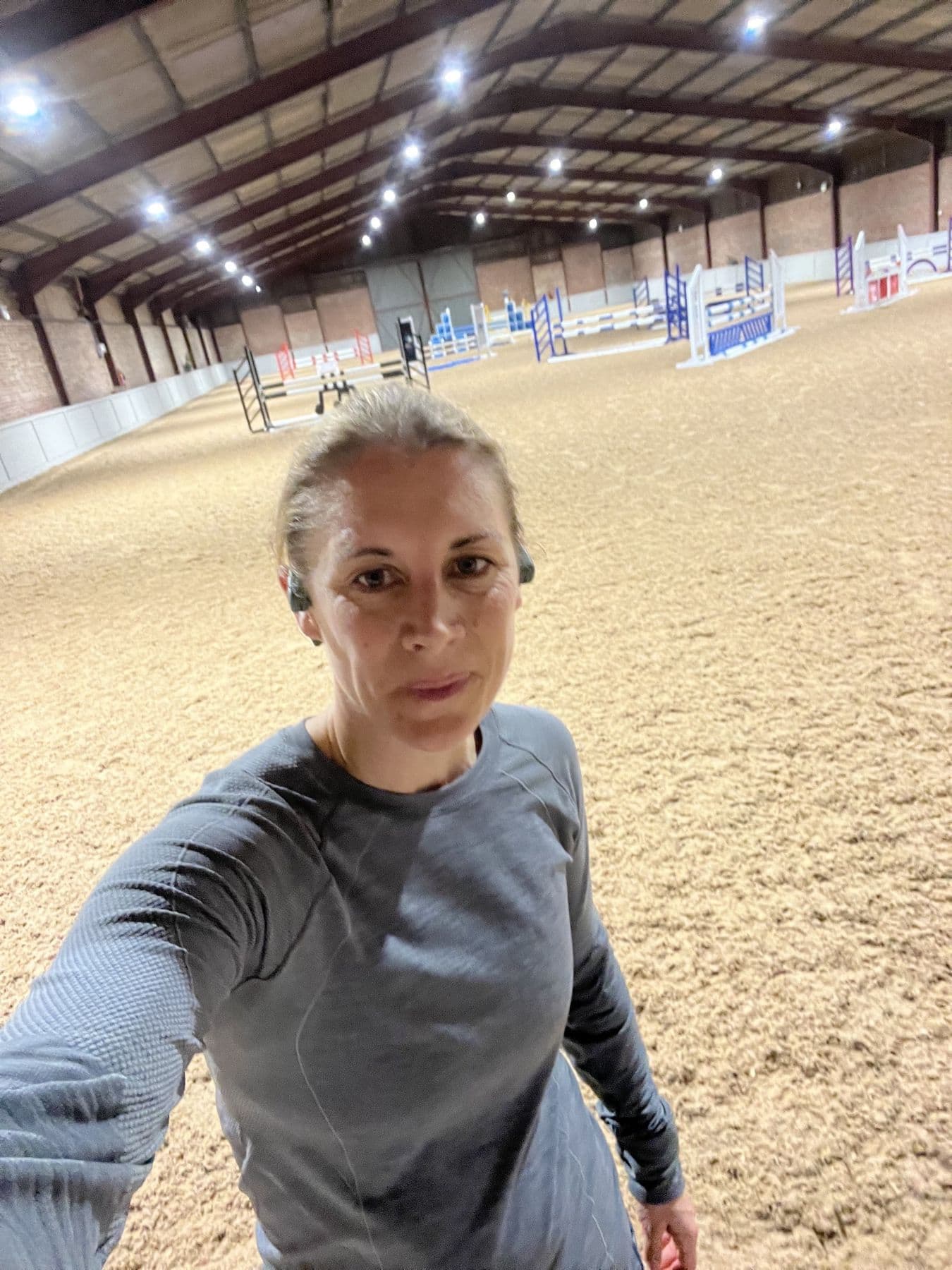
The Cheshire Desert!
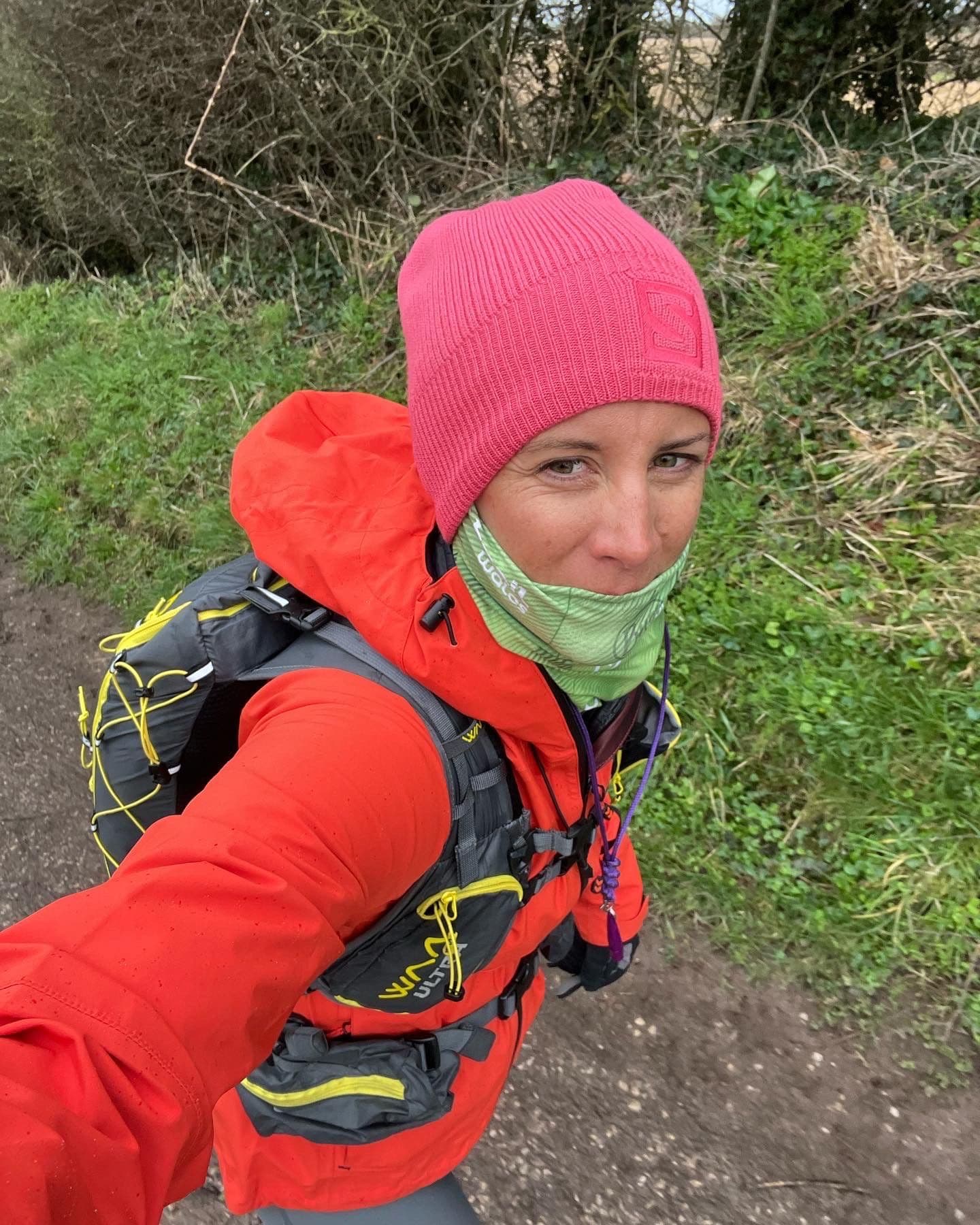
Cold Winter Running with 6kg pack
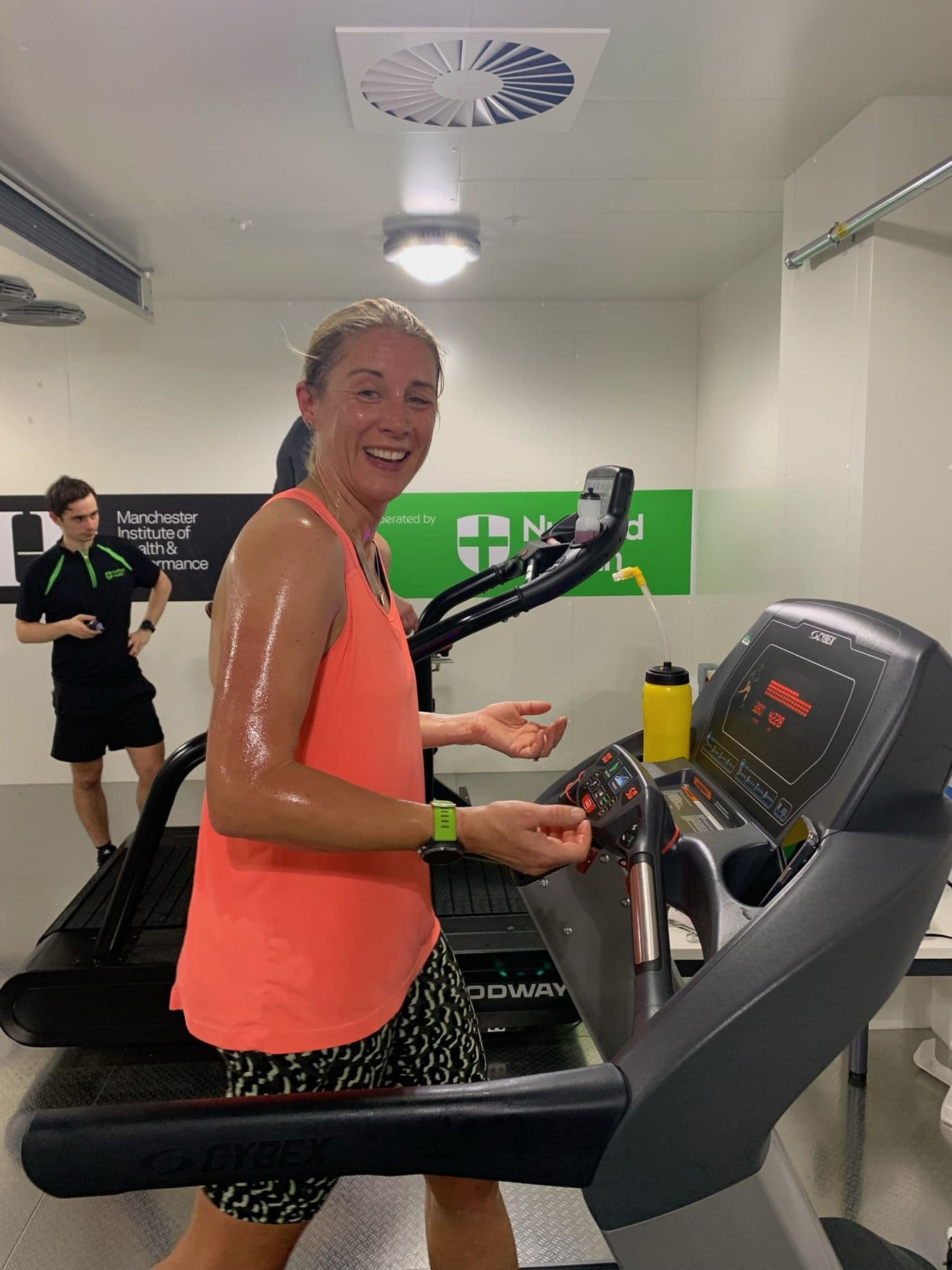
Sweatfest in the Heat Chamber
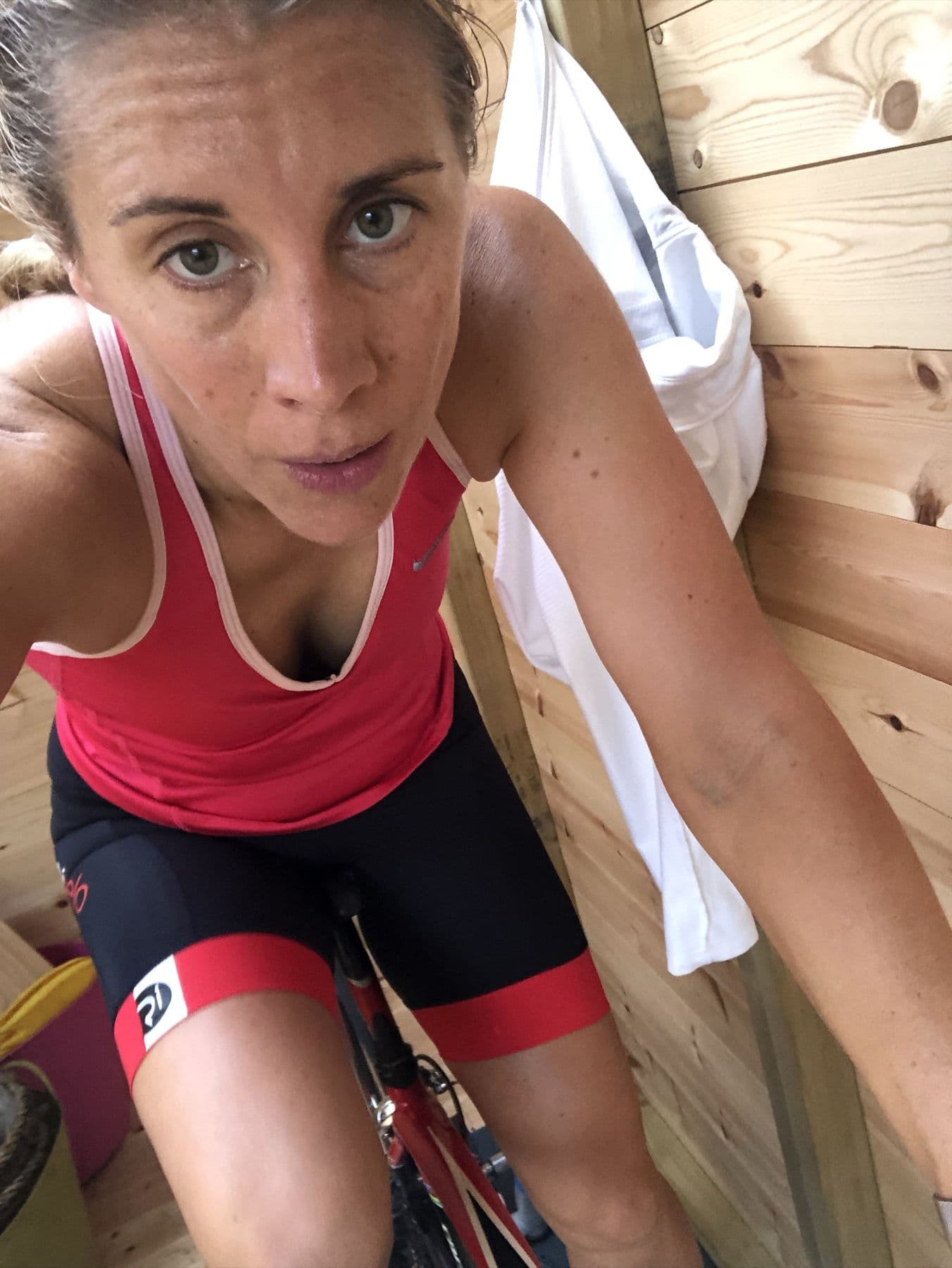
Garden Shed Spin Bike, with fan heaters!
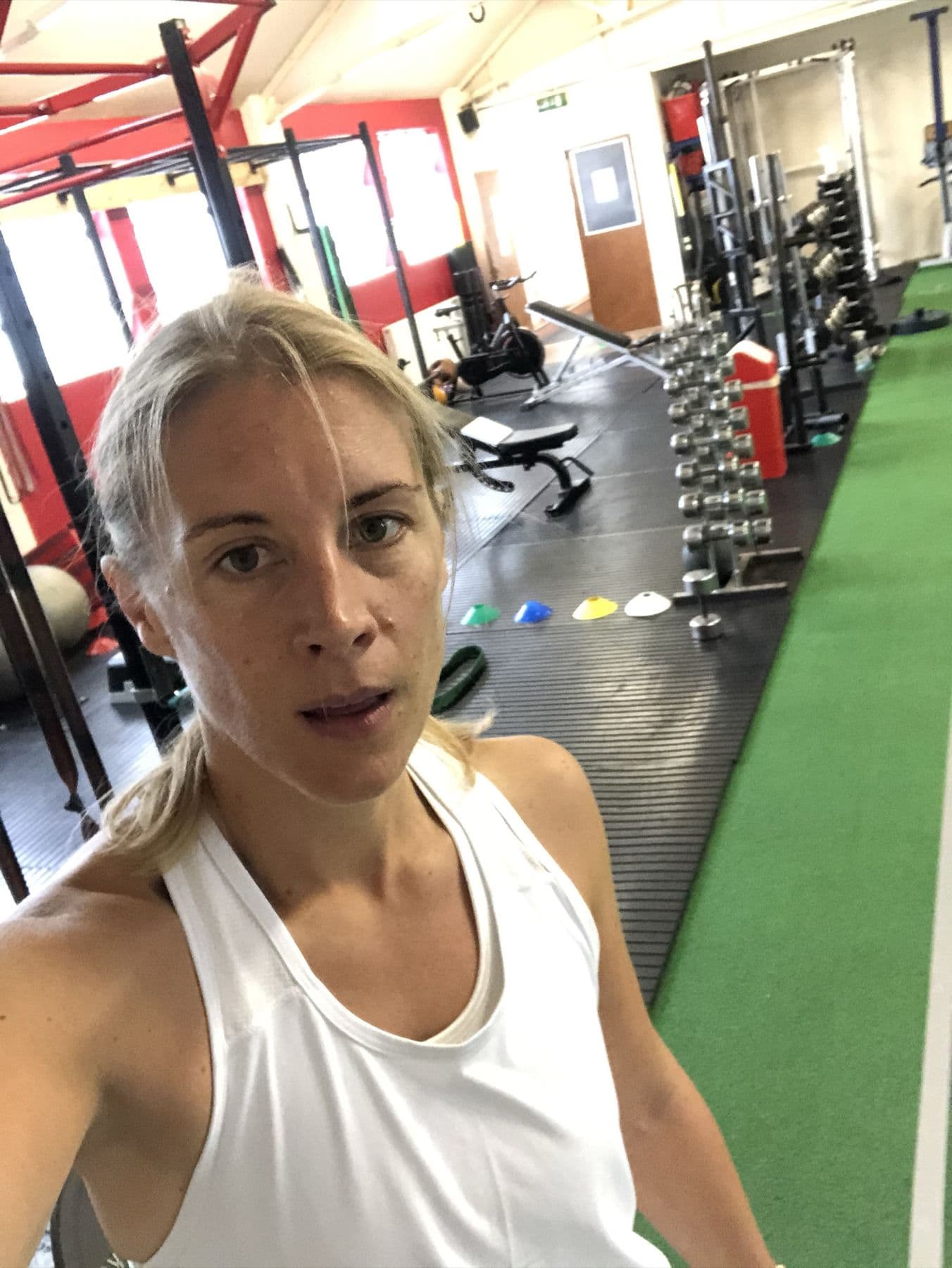
Another S&C session at Studio 121
One of the key things to get right for the MdS is your pack weight. The MdS is self-sufficient, which means I was responsible for carrying everything I would need from the morning of race day 1 to the finish of day 7. This included food, sleeping kit, mandatory kit, clothes, water from check point to checkpoint, everything! The MdS provide you with a “tent” and they give you 3 litres of water at every check point. The minimum pack weight (without water) is 6.5kg but most runners will tend to come in around 9kg. So, that meant hours and hours of weighing, measuring, re-packing and re-weighing every single item that went into my kit. Then unpacking it all and starting again because you’re still weighing in at 12kg!!
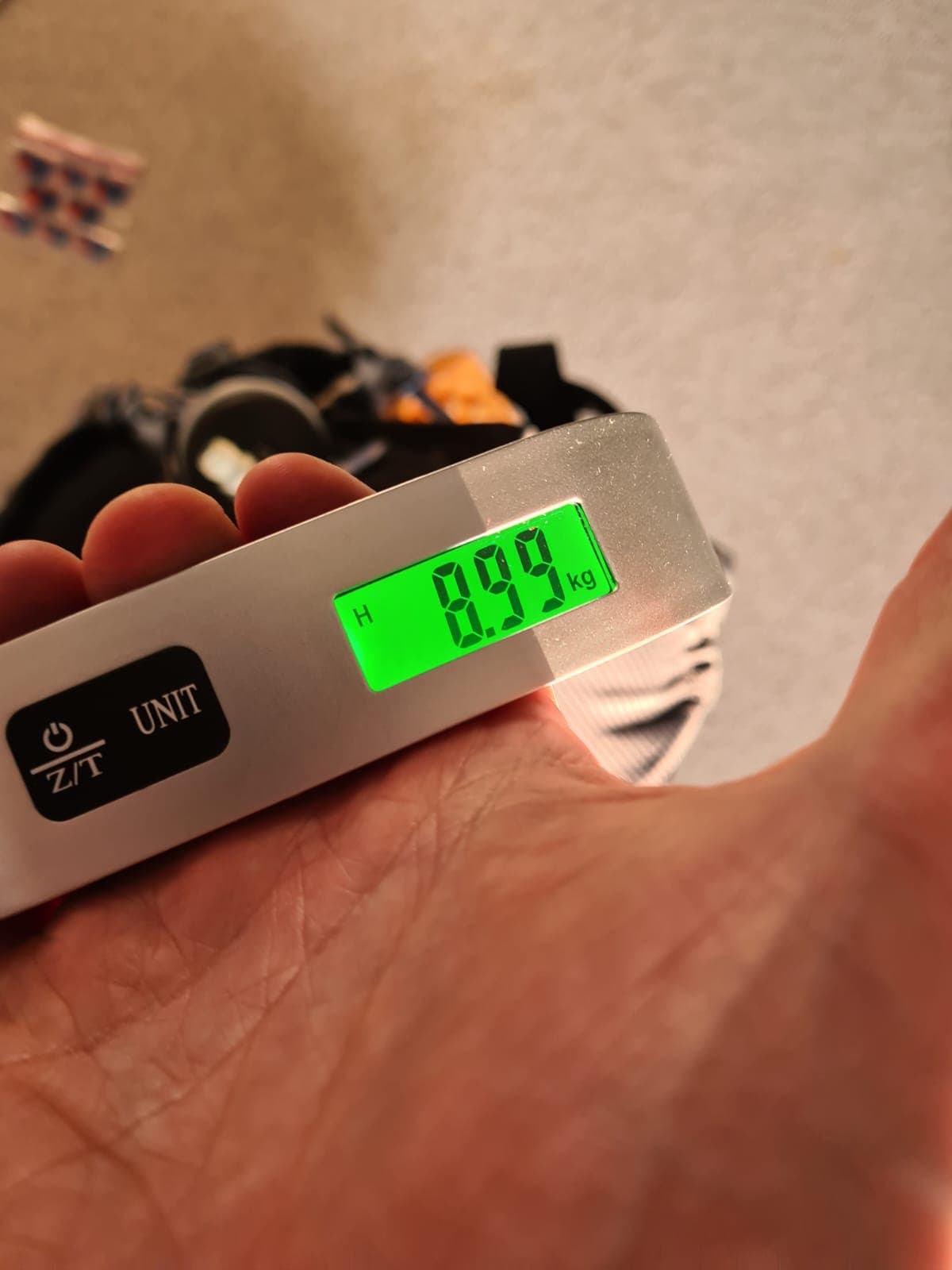
Final Weigh-in
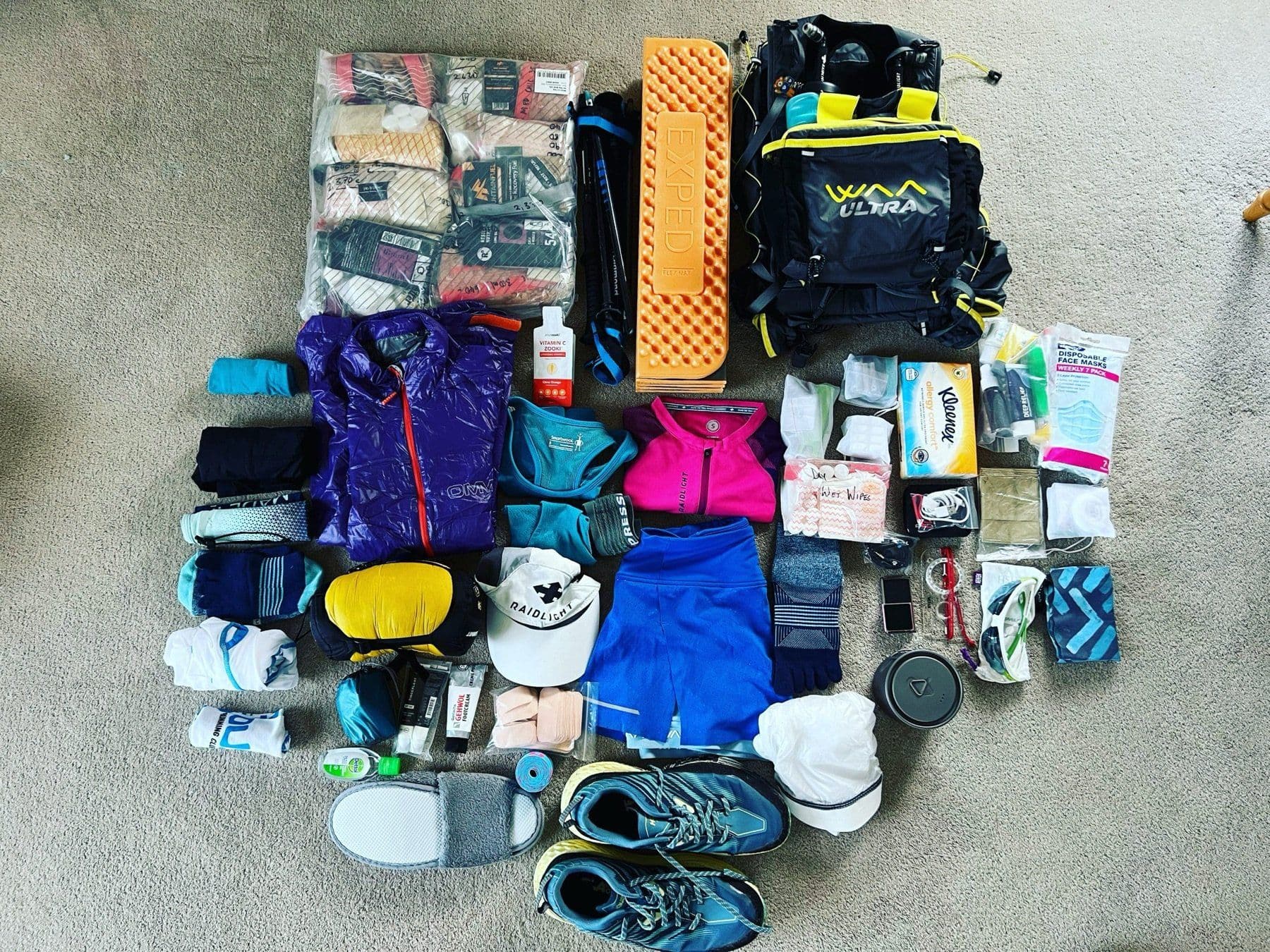
All my kit
I managed to settle on my pack weighing 9kg without water, and this was what I trundled off to registration and kit check with on the first day out in the Sahara. I passed all my medical, ECG and kit checks and said goodbye to my travel bag that I’d see again 7 days later at the finish. There was a real buzz around camp that night and I don’t think anyone slept! We’re woken around 5am each morning when the Berbere’s come and dismantle the tents, and all 8 of us are left in the cold desert morning watching the camp come to life. Each race day tends to start about 8am so after some rehydrated breakfast and a lot of pack faffing everyone slowly makes it to the start area. On Day/Stage 1 there were 900 of us all anxiously listening to Patrick welcome us all to the Sahara and run through the days briefing. Finally Highway to Hell bellows out of the speakers and we’re off on our way across the desert.
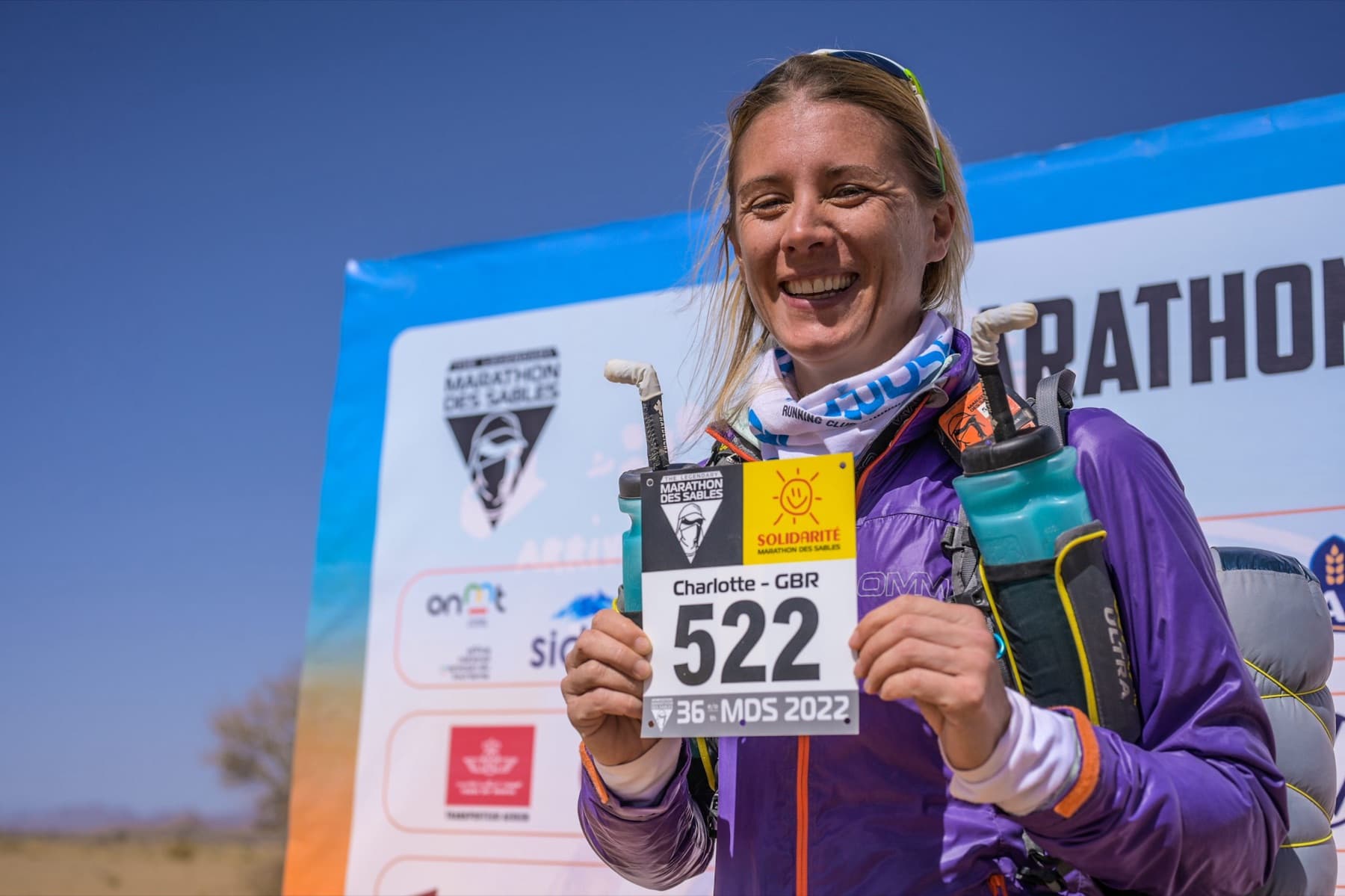
Clean and smiling at the start!
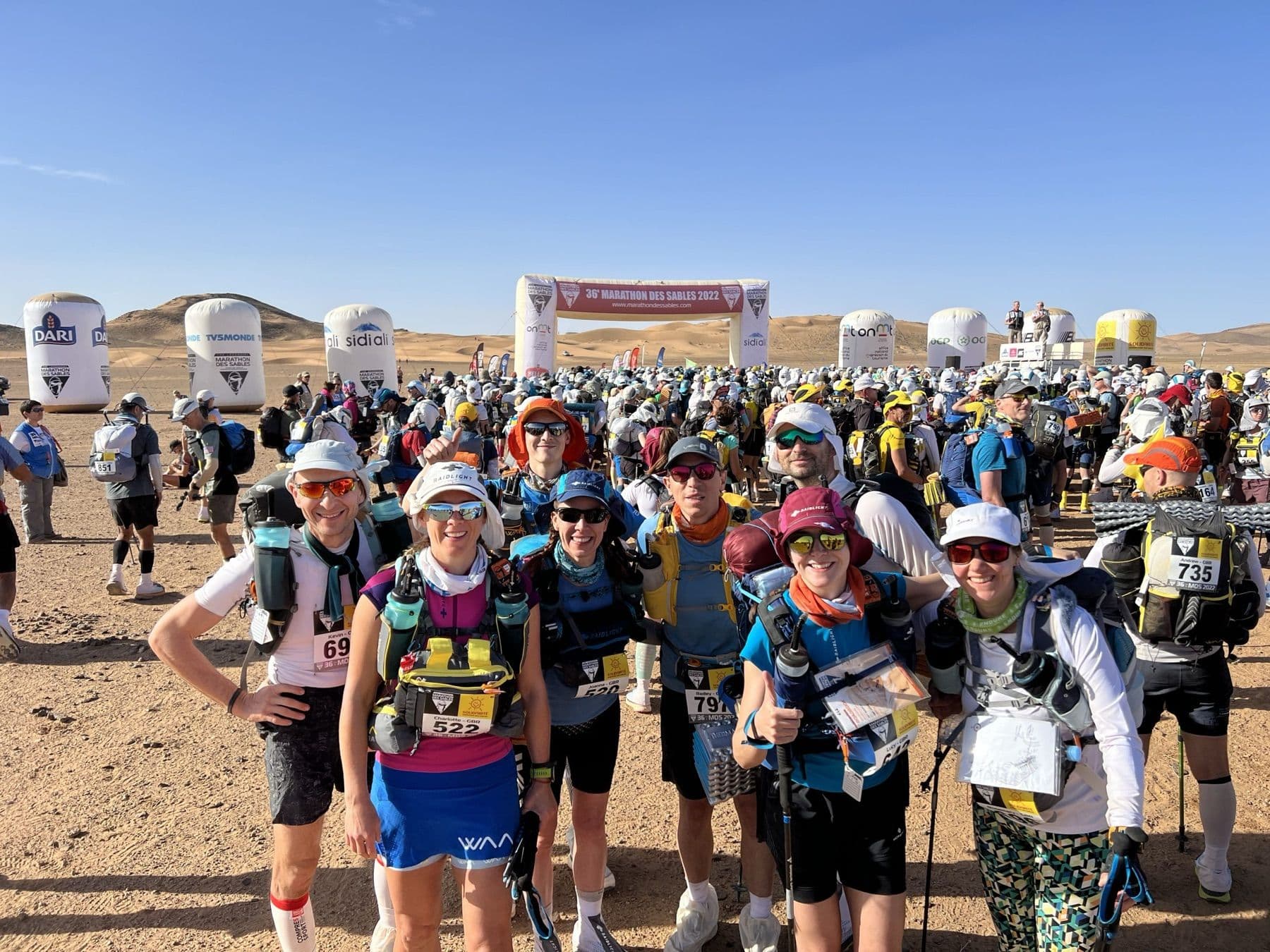
Tent 65 Team
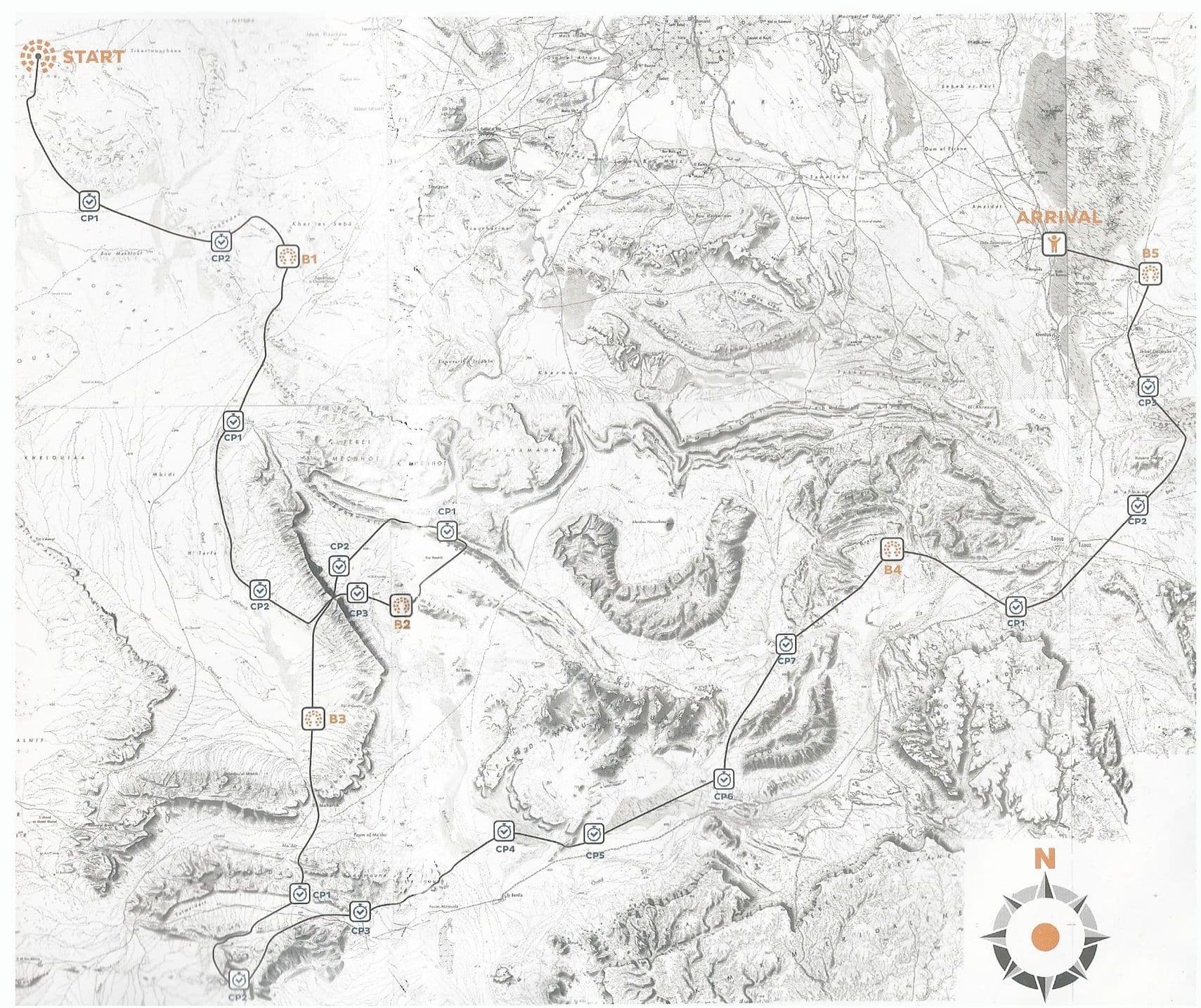
The 2022 Route
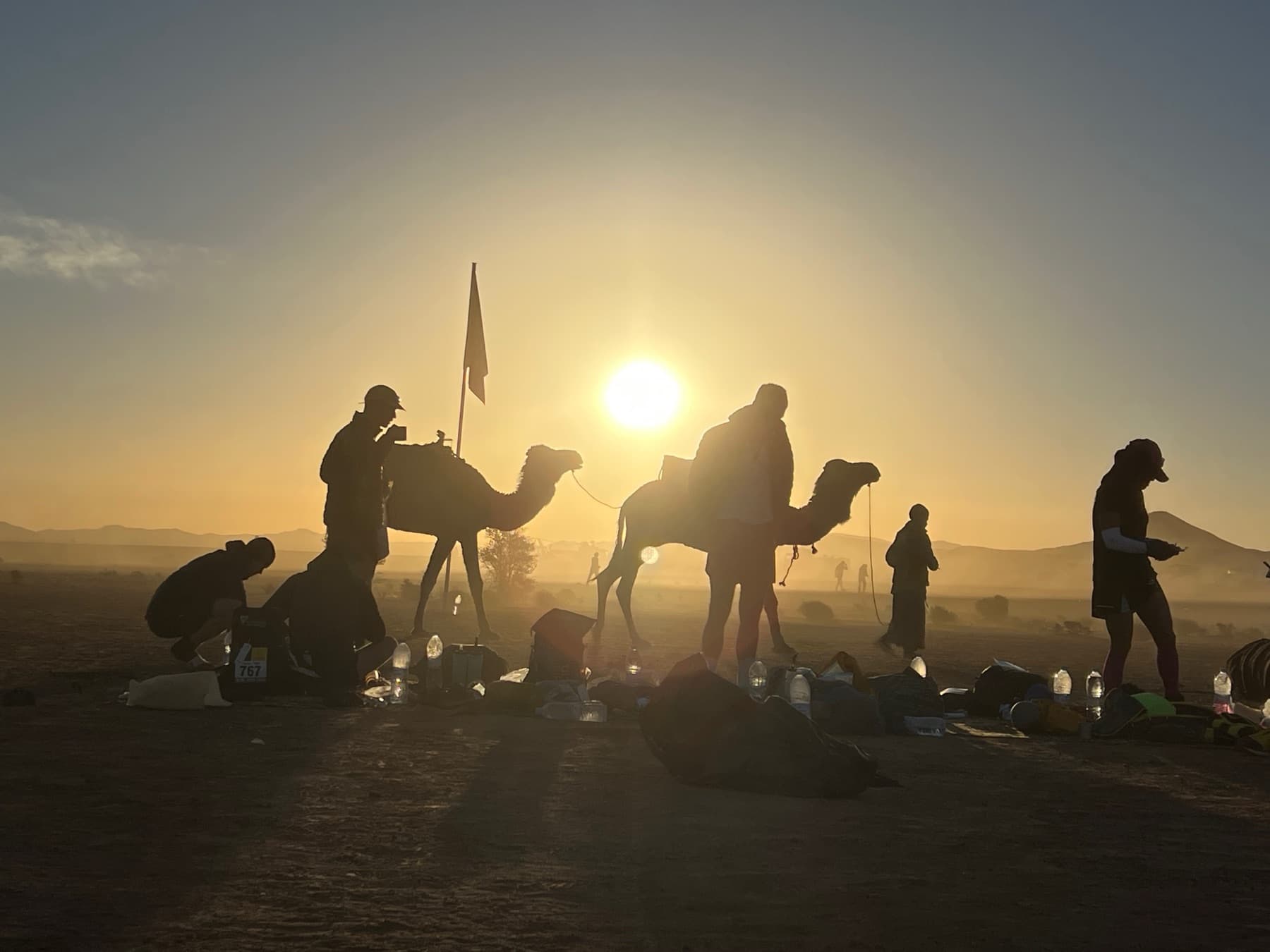
Sunrise on Day 1
Stage 1 was 18 ½ miles and took in 1000ft of elevation and took me 4 ½ hours. The first day was fairly uneventful and took in an amazing variety of dry river beds, soft sand dunes and compact sandy trails. Looking back, I think it was a gentle introduction for the beast of a route that was to come!
Stage 2 was 24 miles, 2,500ft of elevation and took me 7 ½ hours. There was a lot more soft sand on the route than the previous day, and the road book talked about the Jebel that we would climb before camp at the end of the route and we had to make it there before a certain time or we’d be pulled from the race. However, what stage 2 really threw at us was sandstorms. Hours and hours and hours of soul-destroying sandstorms!! It can only be described as trying to move through a wind tunnel whilst being sandblasted back to raw skin!! Once we eventually made it to the bottom of the Jebel (Arabic of big bas***d mountain!) and into some shelter it was like climbing through A&E after a busy Saturday night, there were people sitting in any bit of shade they could find gathering themselves back together, or with their head between their knees throwing up! We eventually made it back to camp only to find it being ravaged by the storm and our flimsy berbere tents on the floor covered in sand!!
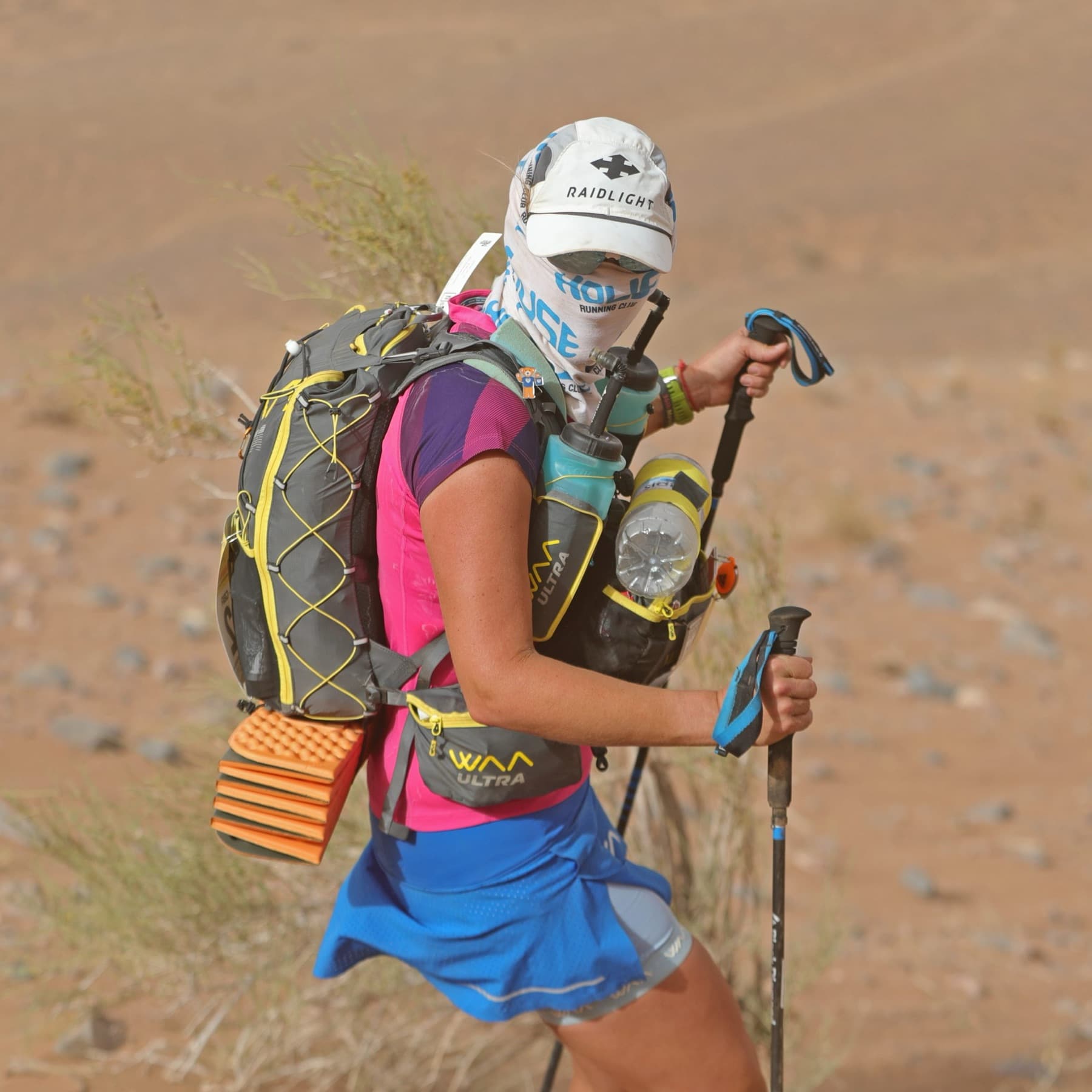
Down a dune in a storm
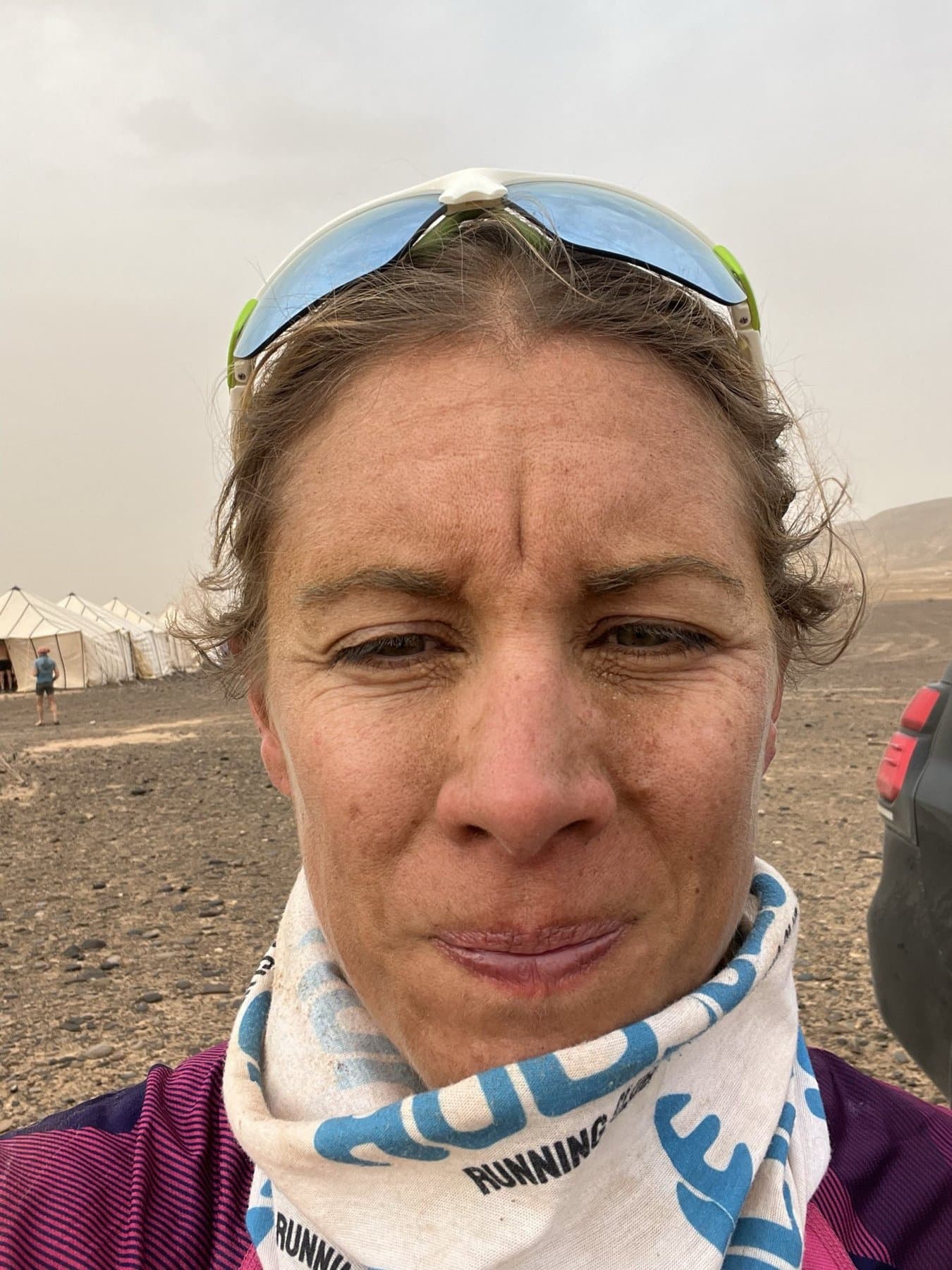
A grubby day in the sandstorm
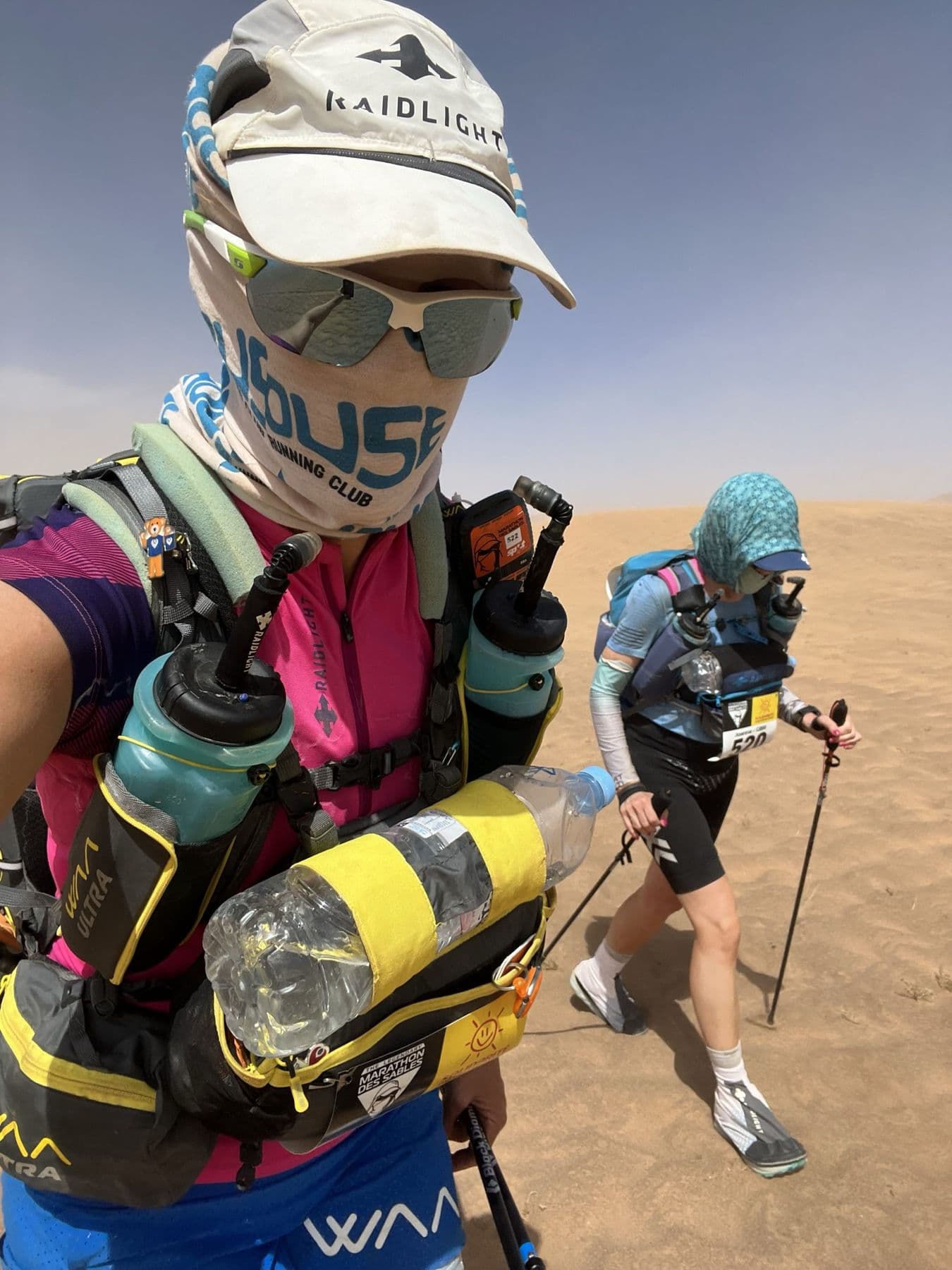
More Sandstorms!
Stage 3 was 19miles, 3,800 ft and took me 5 ¾ hours. After sleepless night, we were up and out early again, but this stage was by far my favourite of the whole route. We had lots of jebel climbs and 2 stunning ridge lines to “run” along and all finalised by a climb up a huge sand dune that was so big it needed fixed ropes to climb. I loved every minute of stage 3!!
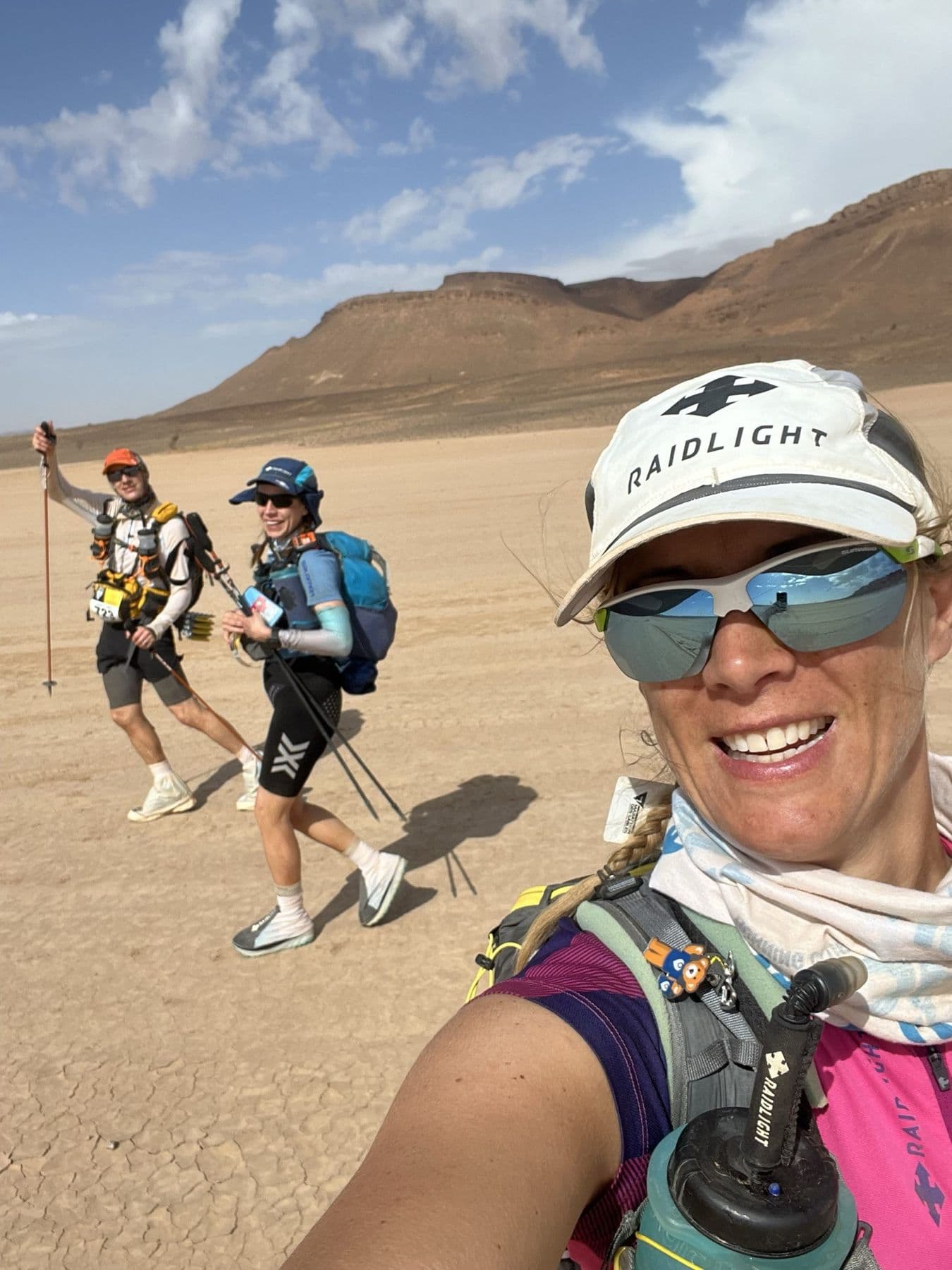
Start of stage 3
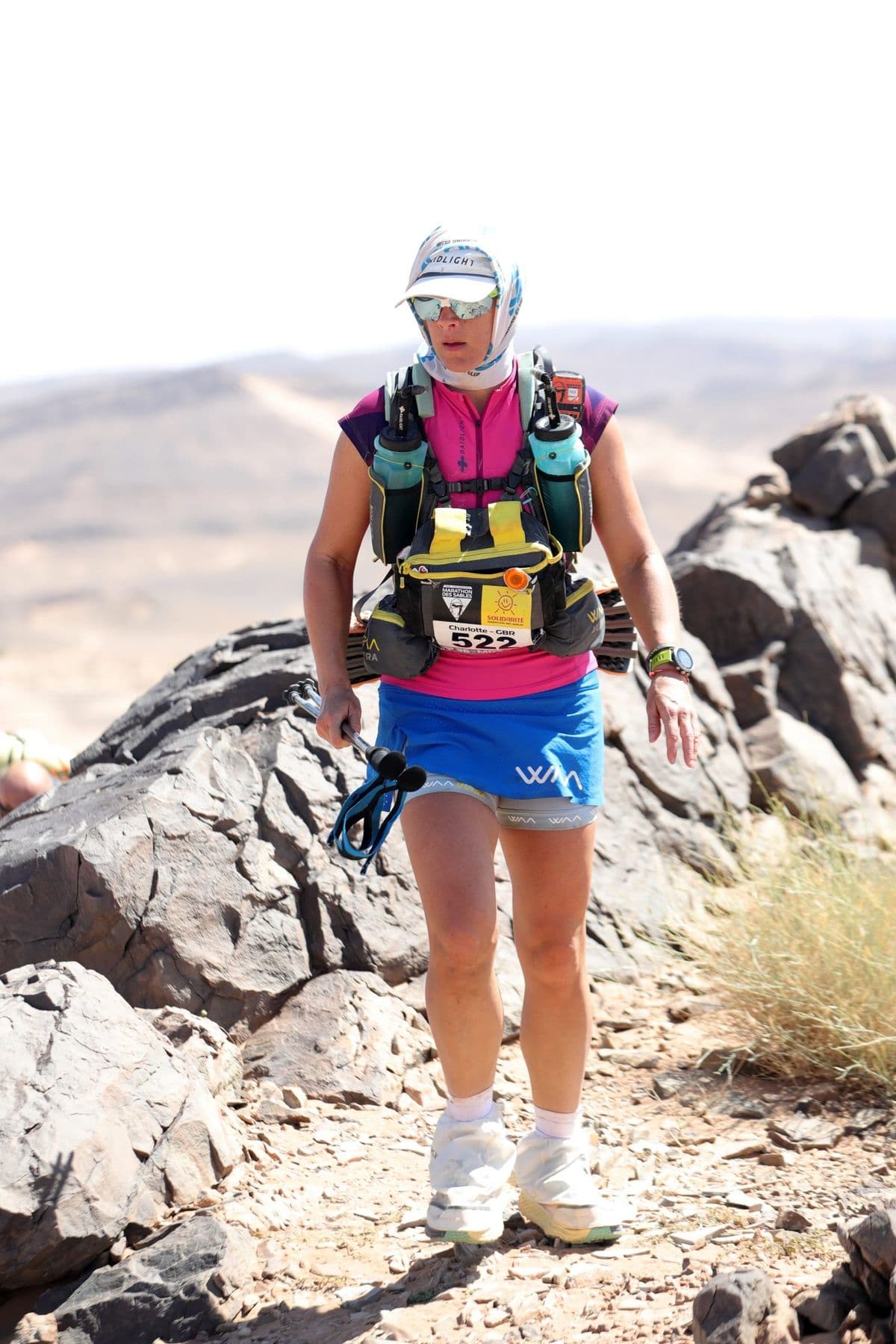
Mountain Stage
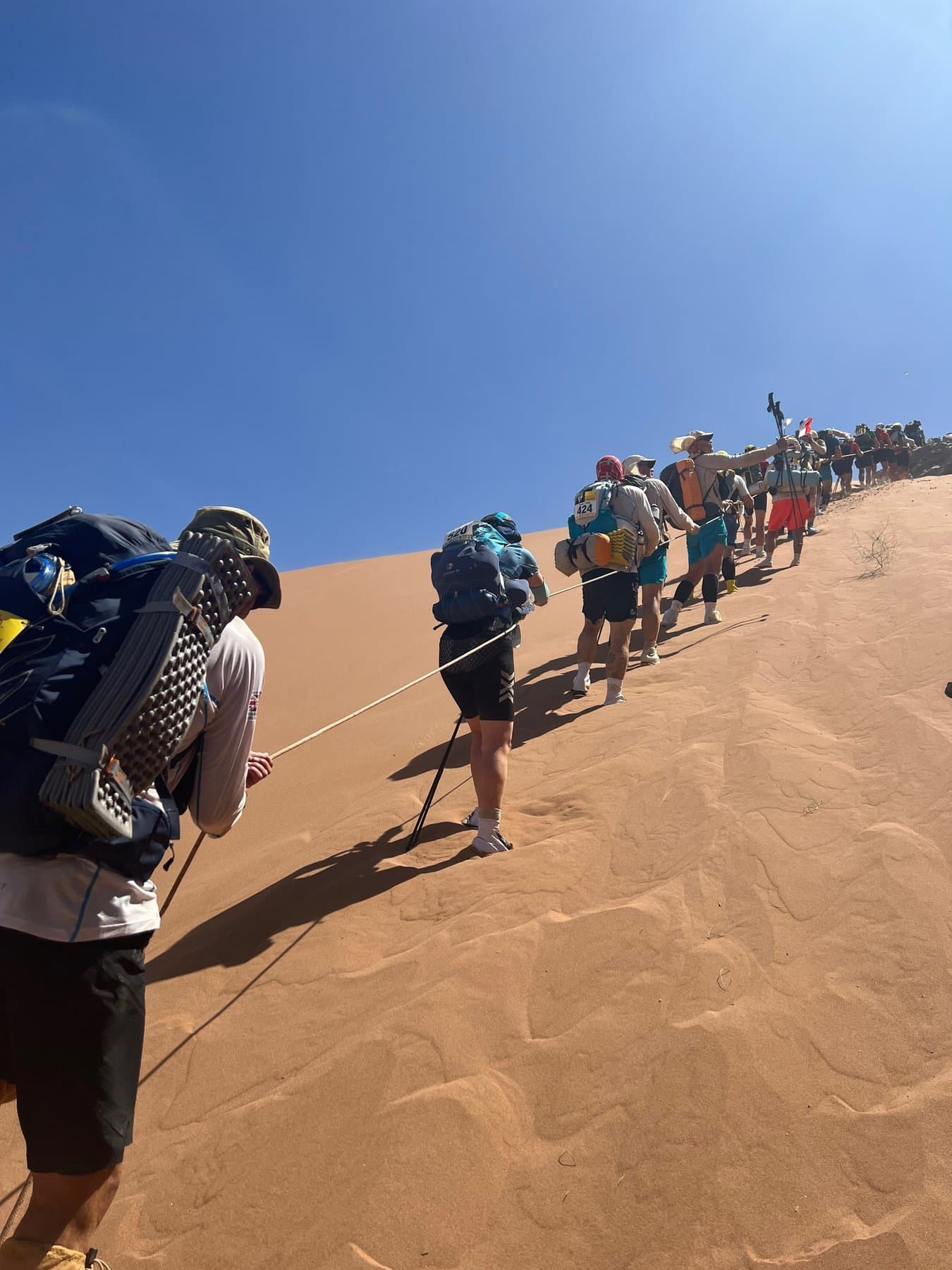
How to climb a massive dune!
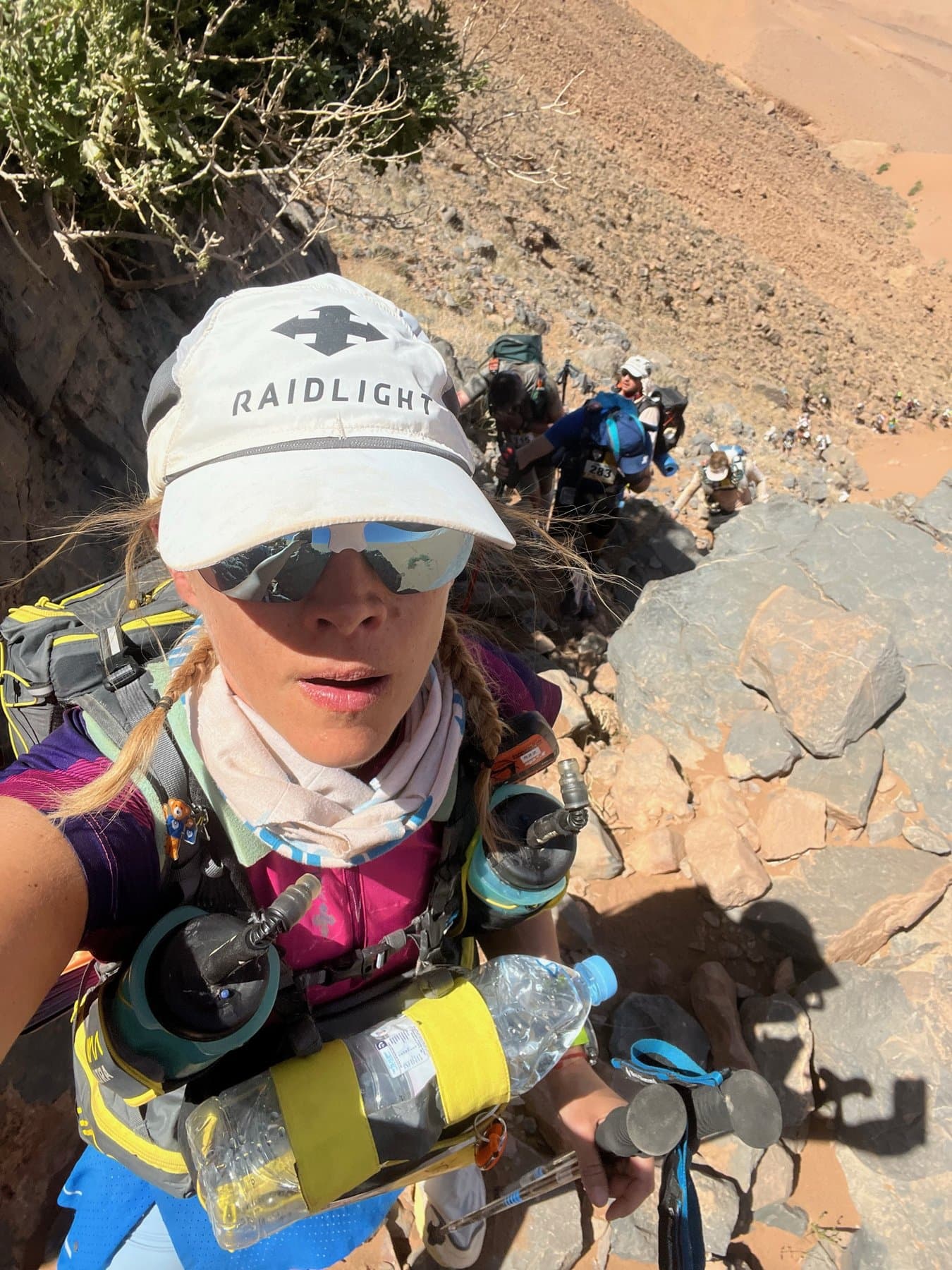
Scrambling up to the ridge
Stage 4, the Long stage. 54 miles, 3,600ft and took me 18 ½ hours. This is the one that everyone talks about. This is the stage that, if you’re sensible, you spend the first 3 days saving your resources for! You’re given 35 hours to make it to the finish and how you chose to do that is up to you. You can start and just keep going until you’re done or you can stop at a check point, eat and sleep, and then get up and go again the next day. As long as you can make the cut off times then you can complete it how you like. I chose to keep going until I was finished. The route itself was fairly uneventful, sand dunes, salt flats, dry river beds and compact trails. All was going well until CP5-6, we were in the dark by this stage but it turned out to be 10km of soft dunes and my energy just left me. This was the “dark headspace” moment for me that everyone says you will experience out there. I eventually crawled into CP6, threw myself on the floor and sobbed!! I was tired, hungry and exhausted and felt I wasn’t going to be able to do it in one go like I’d hoped for. I sat there for about 5 minutes before I went into my pack and got some food, I had a lovely chat with a couple of runners and before I knew I was feeling much better. I got up, dusted myself off and just kept going. Moving through the most amazing starlit skies, in total darkness on my own was invigorating and by 02:30 I could see the finish line up ahead and I was done.
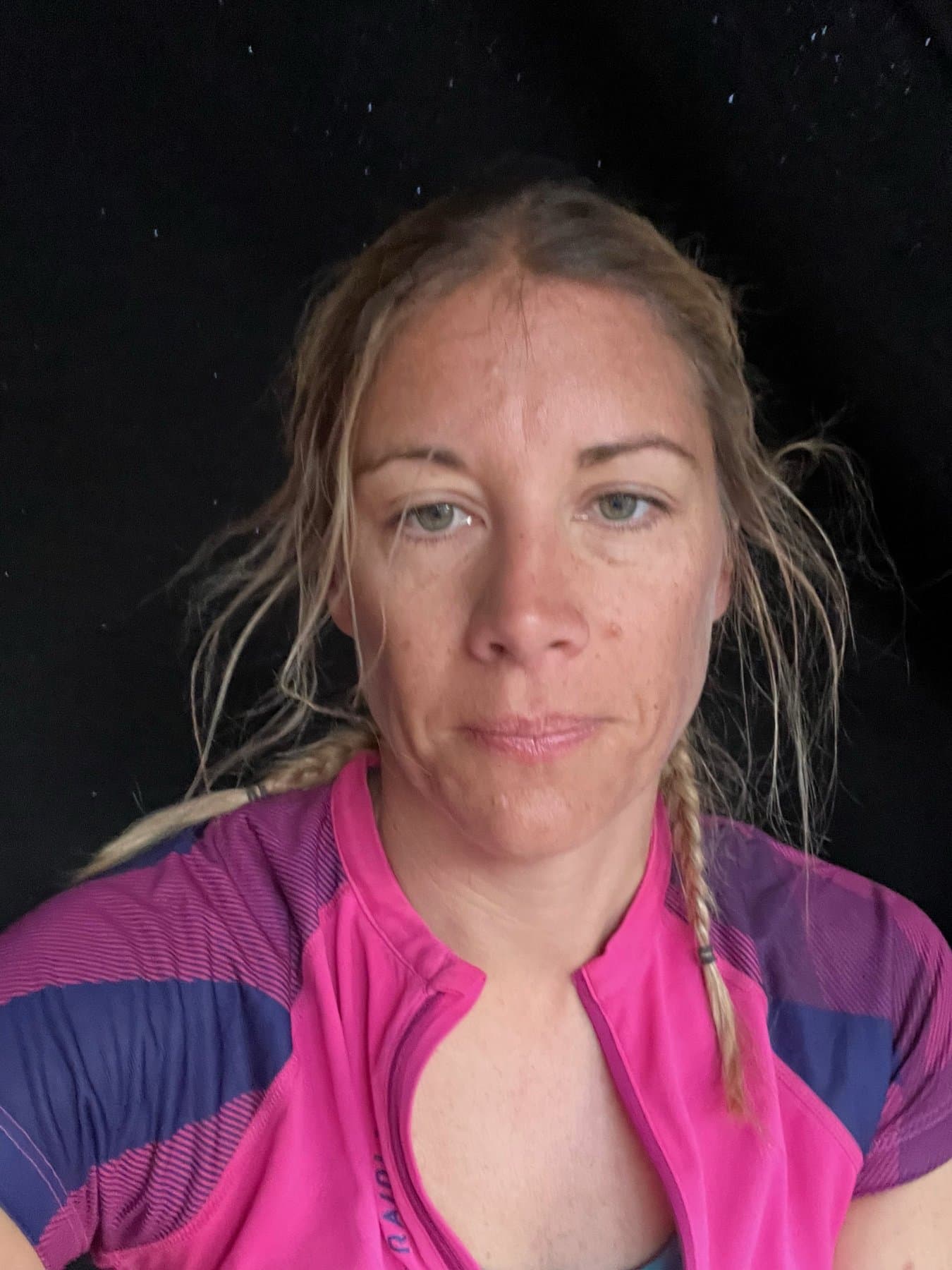
Camp life & lack of sleep taking it’s toll!!
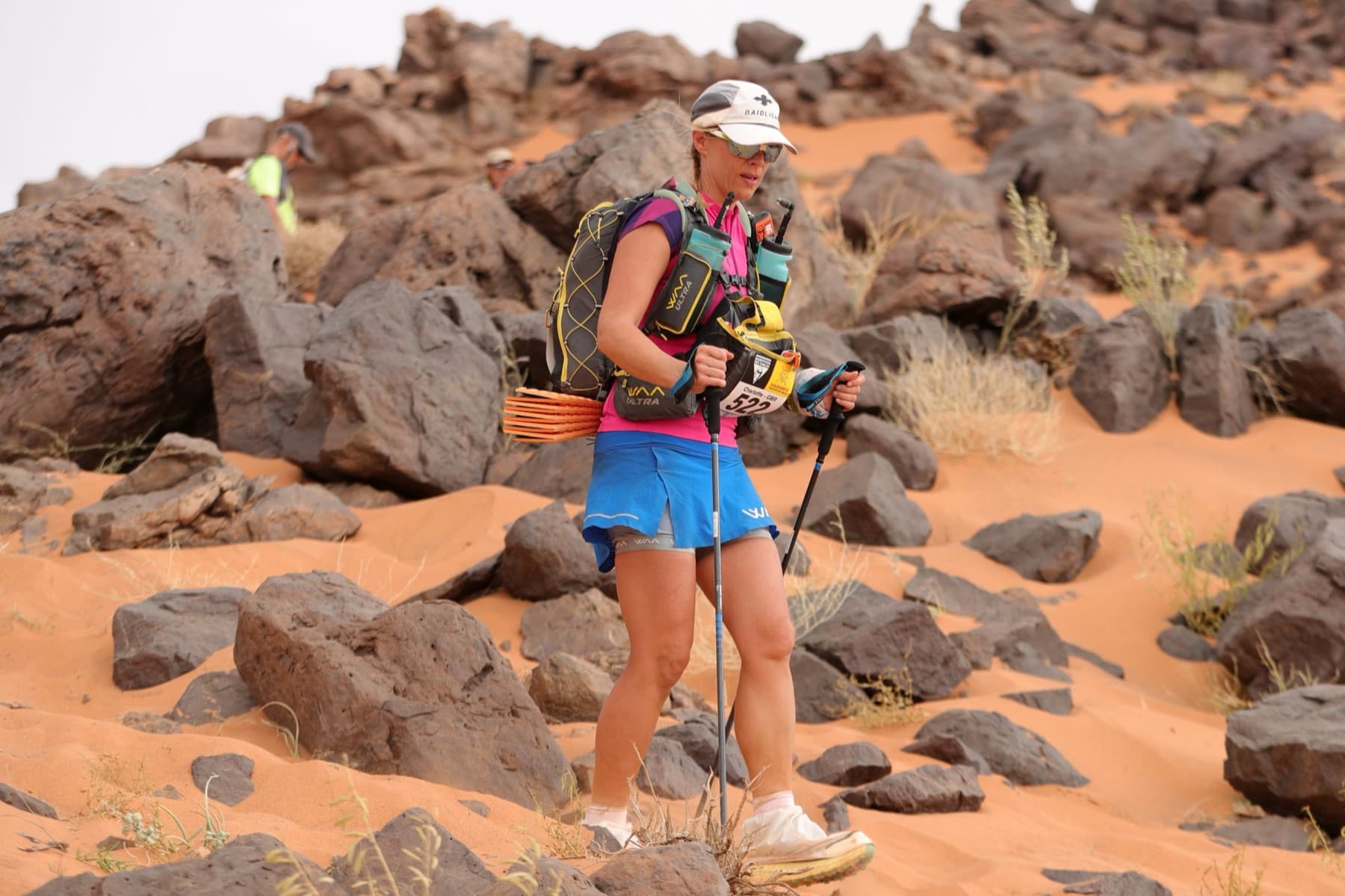
Stage 4 dunes & rocks
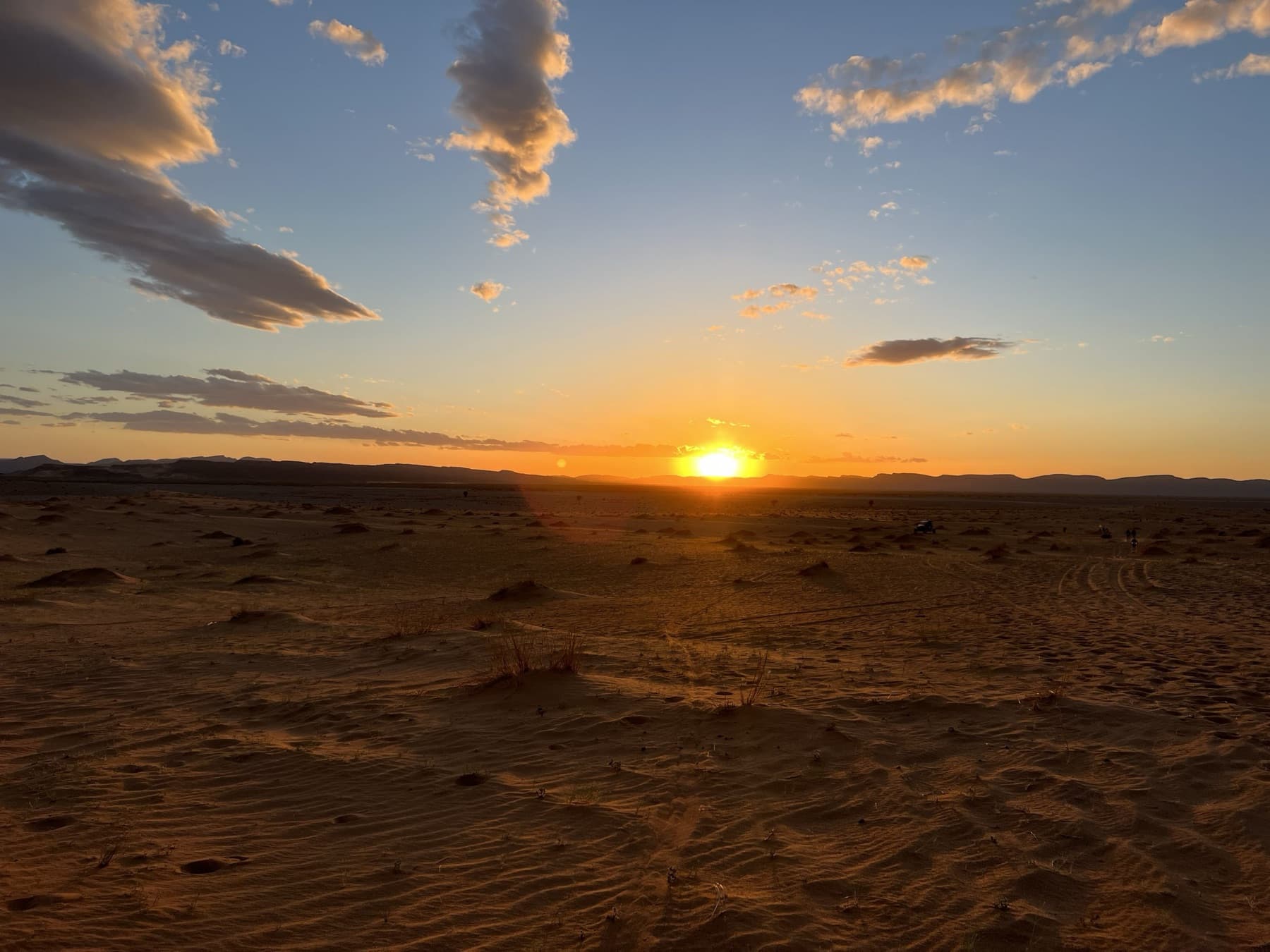
Amazing desert sunsets
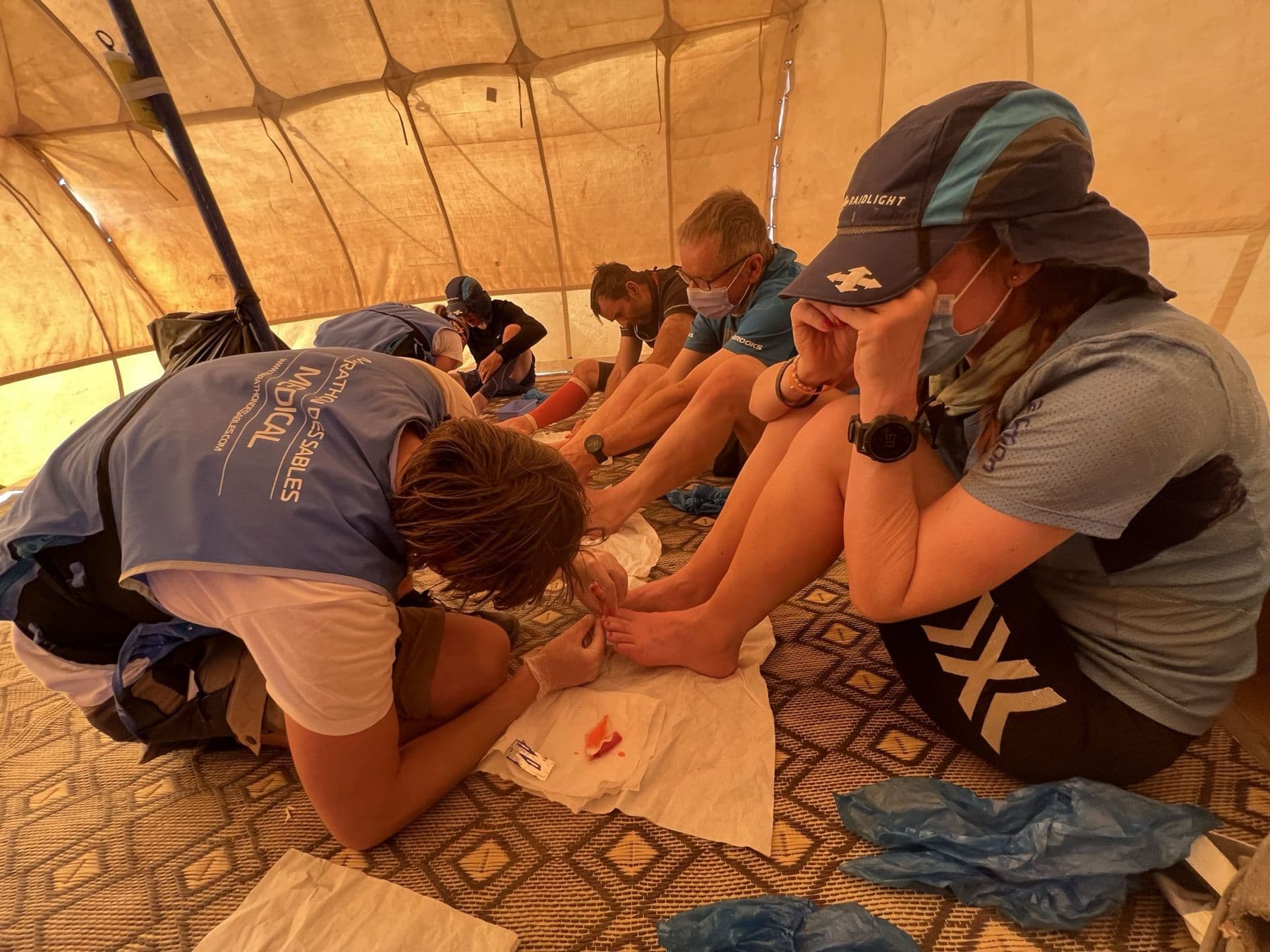
Doc Trotters Tent
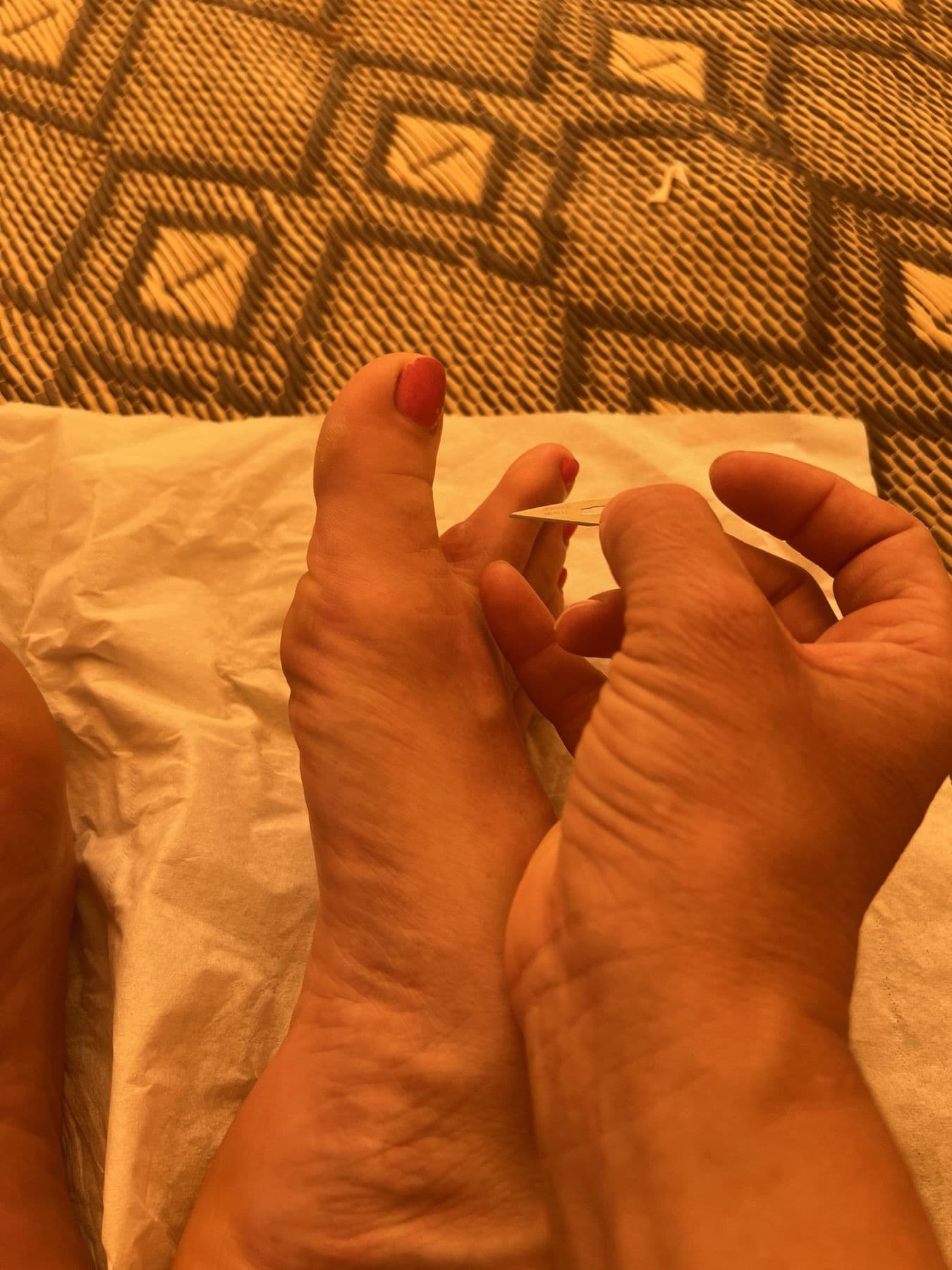
Foot DIY
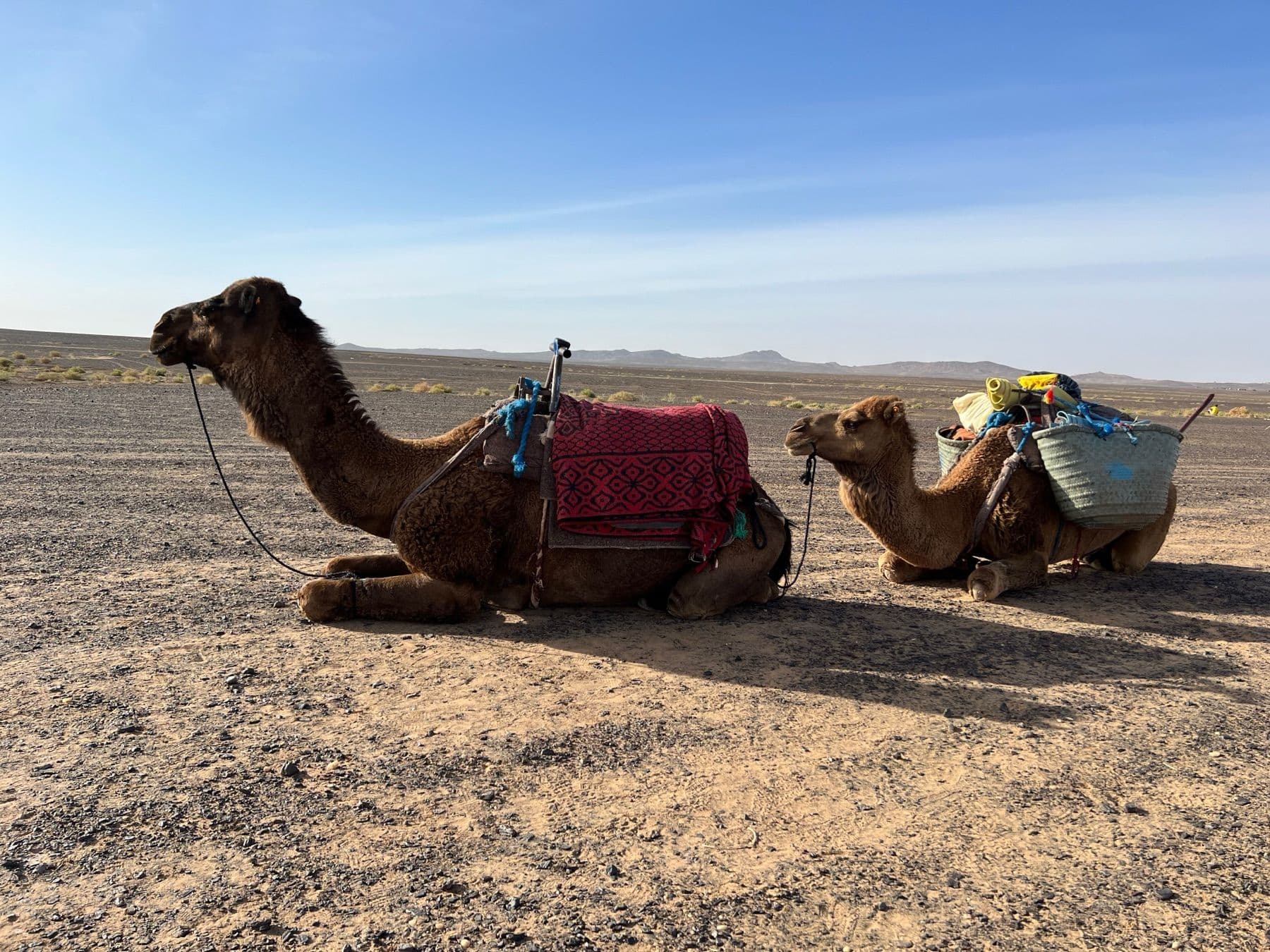
Camels taking it all in their stride.
Stage 5 (day 6) 26.2 miles, 1,300ft and took me 6 ½ hours. Without doubt this was the most running or shuffling I did across the whole event. The route took us back towards villages and some spectators, the terrain was mostly hard and compact and by now my backpack was probably half the weight it had been at the start. When I eventually saw the finish line in the distance all the emotions of what I had achieved and why I was doing it came flooding out. I threw my arms around Patrick and cried with elation, relief, and sheer joy that I could stop running!!
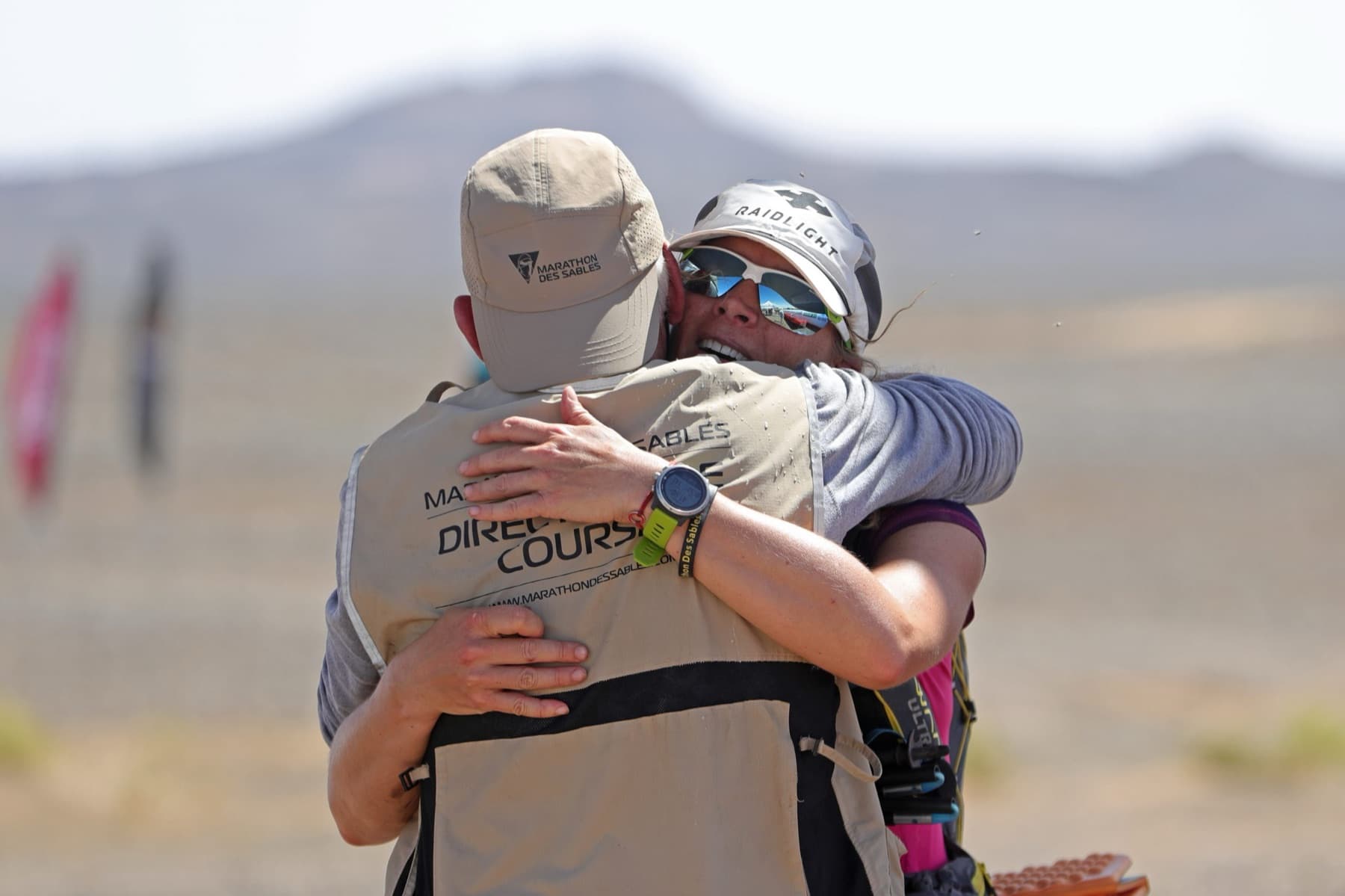
Finally Finished!
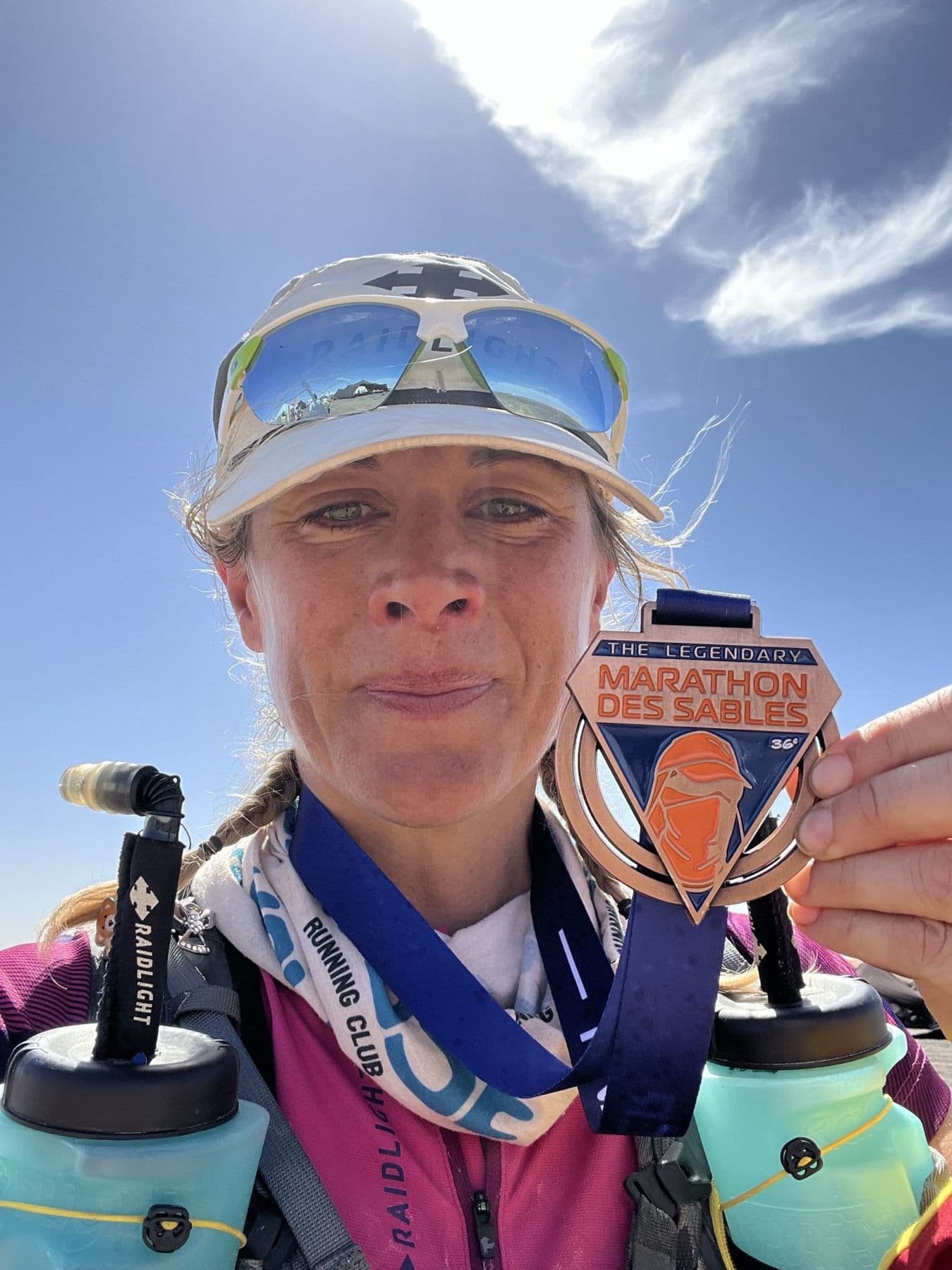
Worth the pain
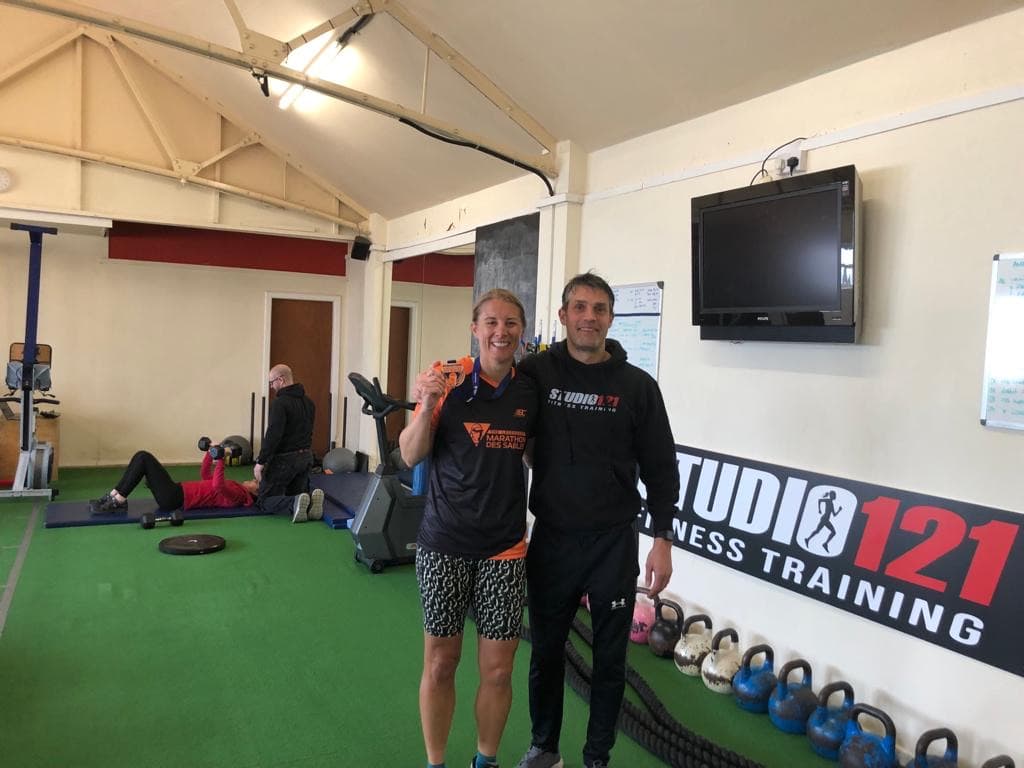
Showing off the finishers Tee & bling
The MdS is a race like no other. I loved every minute of it and would recommend it to anyone who really wants to be there. Our tent team will be friends for life and without all their comradery and laughter, tears and support we wouldn’t have been one of the few tents to have all 8 finish. There were runners there who had never run further than 26 miles, there are people who never run a step and walk every one of the 250km. It’s a race that can make you or break you but it’s a race you will never forget.
Some fun MdS Stats and Facts…
- I did 348,477 steps in 7 days
- I consumed 96 litres of water
- Survived on 12 1/2 hours sleep
- Raised almost £7,000 for The Christie
- There were 897 starters, 802 finishers (c. 20% are women).
- Proportionally less women drop out than men – because we’re hard as nails!!
- 85 yrs – age of the oldest finisher this year
- 16yrs – the youngest finisher this year (& youngest ever finisher) – he was British
- 33% British, 33% French, rest “other nations”
- 450 staff, 515 Saharan Tents, 140 jeeps & dune buggies, 25 buses, 2 helicopters, 2 camels!
- 60 medics, 6.5km plasters, 2,700 compeeds, 6,000 painkillers, 150 ltr disinfectant